

Hormone changes are something most women will experience at some point in life. But when these changes start to cause symptoms that affect your energy, mood, sleep, and even your weight, it can be hard to know what’s going on. One pattern that shows up often—especially during your 30s, 40s, and 50s—is called estrogen dominance. This article breaks down what that actually means, how it might show up in your body, and the gentle steps you can take to feel more balanced.
What Is Estrogen Dominance?
To understand estrogen dominance, it helps to first understand what estrogen and progesterone do.
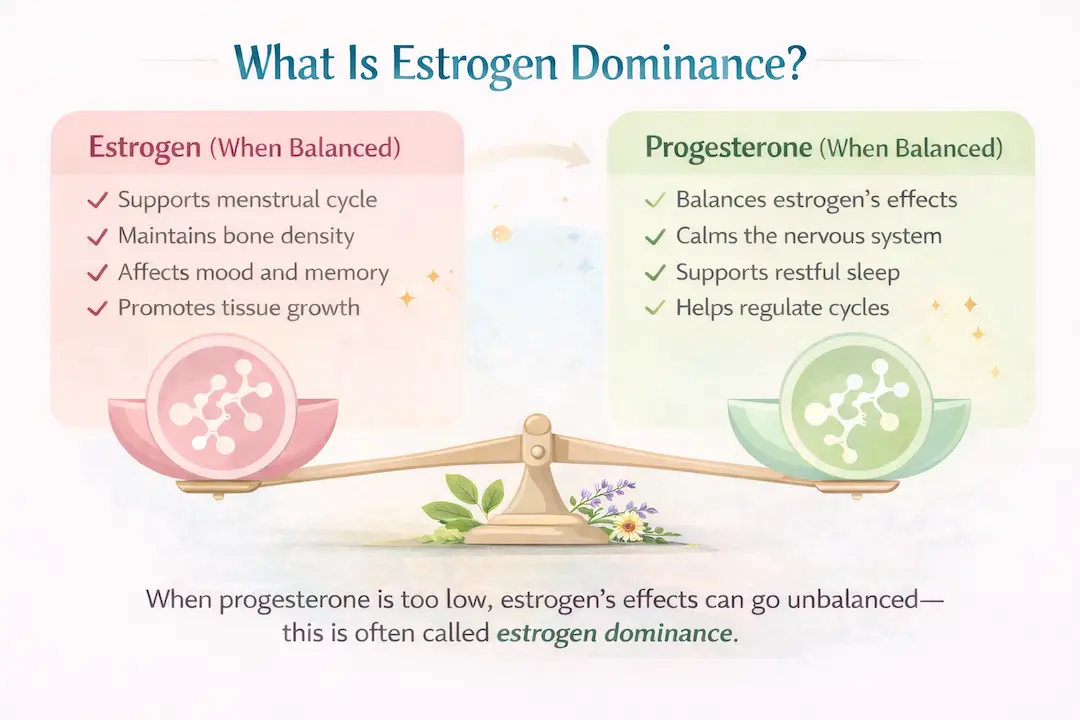
Estrogen is one of the main female sex hormones. It supports the development of reproductive organs and helps regulate the menstrual cycle. Beyond reproduction, estrogen influences bone strength, mood stability, memory, skin health, and even energy levels. When balanced, it works in harmony with other hormones to help you feel emotionally and physically well throughout your cycle and across different life stages.
Progesterone is another key hormone that helps balance estrogen. It rises after ovulation and prepares the body for pregnancy. But even if you’re not trying to conceive, progesterone plays a calming role in the body. It helps support sleep, reduces anxiety, and keeps estrogen in check.
Estrogen dominance happens when the balance between estrogen and progesterone is off. This doesn’t always mean your estrogen is “too high”—it can also happen when your progesterone is too low. The result is that estrogen’s effects are left unbalanced, which can create a ripple effect of symptoms.
This imbalance is most common during perimenopause, but it can show up earlier too. It’s often connected to stress, poor sleep, nutrition, certain medications, or even the products we use every day.
You don’t need a lab test to suspect that something might be off. Listening to your body is a powerful place to start.
Common Signs You Might Have Estrogen Dominance
Every woman is different, but here are some of the signs that may point toward estrogen being out of balance:
- Heavy, painful, or irregular periods
- Bloating or puffiness, especially before your cycle
- Tender or swollen breasts
- Feeling more anxious, overwhelmed, or moody than usual
- Trouble sleeping
- Headaches that come and go with your cycle
- Weight gain, especially around the hips or midsection
- Feeling foggy or having a harder time focusing
You don’t need to check every box on this list to be experiencing estrogen dominance. If you’re noticing a few of these symptoms consistently, especially if they come and go with your cycle, it might be worth exploring your hormone health further.
What Causes Estrogen Dominance?
There are several reasons why your body might end up with more estrogen than it can handle or too little progesterone to balance it out. Most of the time, it’s a mix of factors—not just one thing. Here are some of the more common contributors:
Your Body Isn’t Ovulating Regularly
Ovulation is a key part of your menstrual cycle—and it’s also how your body makes progesterone. Without regular ovulation, estrogen can go unbalanced because there’s simply not enough progesterone to match it. This can happen during perimenopause, but also if you’re under a lot of stress, not eating enough, overexercising, or using hormonal birth control that suppresses ovulation.
When ovulation is irregular or absent, your body doesn’t get that calming wave of progesterone, which may lead to cycle changes, mood shifts, or sleep disruptions. Understanding your cycle and noticing if ovulation is happening (through patterns like cervical mucus or temperature shifts) can help you tune in more deeply.
Stress Can Change Your Hormone Levels
Stress is more than just a mental load—it can directly impact your hormones. When your body is under ongoing stress, it shifts into “survival mode” and puts more effort into making stress hormones like cortisol. In this state, progesterone production can take a back seat, which contributes to estrogen becoming dominant.
Chronic stress can also throw off your sleep, appetite, energy levels, and cycle regularity. You might feel wired but exhausted, overwhelmed by small things, or more sensitive than usual. Even low-level daily stress—like rushing, multitasking, or not resting—can add up over time. That’s why supporting your nervous system is a foundational step toward hormone balance.
The Way Your Body Clears Estrogen Matters
Your liver helps process used hormones like estrogen so they can be eliminated. If your liver is overloaded—by alcohol, poor diet, or environmental toxins—this process can slow down. That means estrogen might stay in your system longer than it should.
Your gut also plays a big role here. If you’re not having regular bowel movements or your digestion is off, your body may reabsorb some of that estrogen instead of clearing it.
Everyday Products Can Add to Your Hormonal Load
Some chemicals found in plastics, cleaning supplies, skincare, and even food packaging can act like estrogen in the body. These are called xenoestrogens, and while we’re all exposed to them to some degree, minimizing them can make a real difference.
Think about how often you touch receipts, microwave food in plastic, or use scented lotions or sprays. Over time, these exposures can add up.
What You Can Do to Support Hormone Balance
Supporting hormone balance doesn’t require perfection or a complete lifestyle overhaul. Small, consistent changes can have a big impact. Here are some gentle, effective ways to start bringing estrogen and progesterone back into harmony:
Focus on Whole Foods and Fiber
Eating a variety of colorful fruits and vegetables helps your body detox used estrogen more effectively. Fiber also plays a role in keeping your digestion regular, which helps your body clear out what it no longer needs.
Try adding things like flaxseeds, leafy greens, berries, and beans to your meals. These foods are nourishing and supportive without needing a complicated plan.
Sleep Is Not a Luxury
Your body does a lot of hormone repair work while you sleep. Going to bed at the same time each night, limiting screens before bed, and keeping your room cool and dark can help your sleep improve naturally.
Even small shifts—like turning down the lights after dinner or swapping scrolling for a calming evening routine—can support better rest.
Move Your Body in Ways You Enjoy
Movement helps regulate hormones, improves your mood, and supports detox. You don’t have to commit to intense workouts—walking, stretching, gentle strength training, or dancing in your living room all count.
The key is consistency, not intensity.
Reduce Exposure to Hormone-Disrupting Chemicals
It’s nearly impossible to avoid all environmental estrogens, but you can lower your exposure with a few simple swaps:
- Use glass or stainless-steel containers instead of plastic
- Choose fragrance-free or naturally scented products
- Read the labels on lotions, shampoos, and cleaners (fewer ingredients is usually better)
- Be mindful of processed foods and look for simple, whole-food ingredients
The Environmental Working Group (ewg.org) has helpful guides like the Dirty Dozen and Clean Fifteen to help you shop smarter.
Support Your Body’s Natural Detox Pathways
You don’t need fancy cleanses to support detox. Your body is already doing the work—all you need to do is support it.
- Drink plenty of water throughout the day
- Include fiber-rich foods
- Avoid excessive alcohol or sugary drinks
- Add foods like cruciferous vegetables (broccoli, cauliflower) that support liver health
Consider Gentle Supplements (If Needed)
Some women find that certain supplements help them feel more balanced, especially during times of hormonal transition. These may include:
- Magnesium: Supports sleep, relaxation, and hormone production
- B Vitamins: Help with energy and detox
- Flaxseed or Evening Primrose Oil: May support hormone regulation
- Myo-Inositol: Sometimes used to support blood sugar and hormonal balance, especially if irregular cycles or PCOS-like symptoms (Polycystic Ovary Syndrome) are present
Always talk to a trusted health professional before adding supplements, especially if you’re on medication or managing another condition.
Common Misconceptions About Estrogen Dominance
“It only happens in menopause.”
Estrogen dominance can occur well before menopause, especially in your 30s and 40s. In fact, perimenopause is one of the most common times it begins.
“If I’m not having symptoms, I don’t need to think about hormones.”
Hormonal shifts can be subtle at first. Supporting balance proactively—with sleep, food, and stress care—can help you feel better now and prevent more intense symptoms later.
“You can only understand estrogen dominance through lab testing.”
While lab testing is a helpful tool—especially for getting a clearer picture—your body often gives early clues when something is out of balance. If you’re experiencing recurring patterns like mood swings, cycle changes, or sleep disruptions, those can be important signals worth paying attention to.
“Hormones are too complicated—I’ll never understand this.”
You don’t need to know every scientific detail. You just need the basics and some practical ways to support your body. The more you learn at your own pace, the more confident you’ll feel.
Final Thoughts
Hormonal balance is not about chasing perfection—it’s about tuning in to what your body is trying to tell you. Estrogen dominance is common, and with some gentle shifts in how you eat, sleep, move, and care for yourself, you can start to feel better.
You’re not alone in this, and you don’t have to figure it out all at once. Take what feels doable, and leave the rest for later. Over time, small changes really do add up.