

Sleep problems don’t always start with a clear reason. For many people, sleep simply becomes lighter, more interrupted, or harder to recover from over time. You may feel tired enough to go to bed, but once you’re there, your body doesn’t settle the way it used to. Or you might fall asleep without trouble, only to wake in the early morning hours feeling alert or restless.
When this happens regularly, it’s natural to wonder what changed and whether there’s something simple you’re missing. One factor that often comes up in conversations about sleep, especially during periods of stress or physical change, is magnesium.
This article explains what magnesium is, why it matters for sleep, and how different magnesium supplements work, so you can understand your options without feeling overwhelmed.
What Is Magnesium and Why Does It Matter for Sleep?
Magnesium is a mineral the body needs to function properly. It plays a role in hundreds of everyday processes, including muscle relaxation, nerve communication, and the regulation of signals that help the body transition from wakefulness into rest.
When it comes to sleep, magnesium supports the nervous system’s ability to calm down at night. Adequate magnesium helps reduce physical tension and quiet the ongoing nerve activity that keeps the brain alert. When magnesium levels are lower, the nervous system can remain more reactive, making it harder to fall asleep or stay asleep.
Magnesium is found naturally in foods like leafy greens, nuts, seeds, beans, whole grains, and dark chocolate. These foods are important, but modern stress, caffeine intake, sweating, intense exercise, alcohol, certain medications, and life stage changes can increase the body’s magnesium needs. In those situations, food alone may not fully meet demand, which is why magnesium supplements are often explored as additional support for sleep.
Signs You Might Be Low in Magnesium
Low magnesium doesn’t usually show up as one obvious symptom. More often, it appears as a pattern of subtle changes that build over time.
Common signs can include difficulty falling asleep, waking during the night, lighter or less restorative sleep, muscle tightness, leg cramps, jaw clenching, or feeling physically tired but mentally alert at night. Some people also notice increased sensitivity to stress or a harder time unwinding in the evening.
For women, hormonal shifts can make these patterns more noticeable. During times like perimenopause, changes in progesterone and stress hormones can affect how calm or reactive the nervous system feels. Magnesium doesn’t replace hormones, but it does support the systems involved in sleep regulation during these transitions.
For those who want additional clarity, magnesium levels can be evaluated through lab testing. While standard blood tests don’t always reflect total body magnesium perfectly, they can still provide helpful context when considered alongside symptoms and overall health patterns.
Types of Magnesium Supplements for Sleep
Magnesium supplements come in several forms. Each type combines magnesium with another compound, which affects how it’s absorbed and how it tends to feel in the body. Some forms are more calming and are commonly used to support sleep, while others are better suited for energy, digestion, or general mineral support.
Understanding these differences can help you recognize which options might make sense for you and which ones are less likely to support sleep.
Magnesium Supplements Commonly Used for Sleep
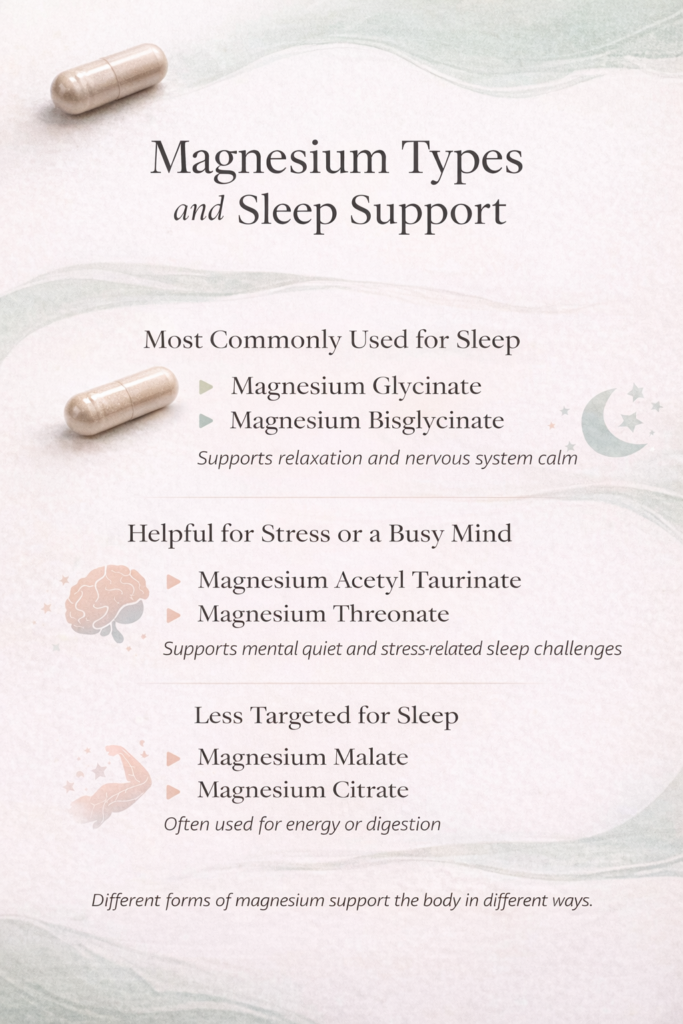
Magnesium Glycinate
Magnesium glycinate combines magnesium with glycine, an amino acid that plays an important role in calming the nervous system. Glycine helps reduce nervous system activity in the evening and supports the body’s natural ability to transition into sleep. It’s also involved in nighttime temperature regulation, which is one of the signals the body uses to initiate rest.
This form is often a good fit if your sleep issues involve muscle tension, stress, or difficulty staying asleep. It’s generally well tolerated and unlikely to cause digestive discomfort. Typical supplemental amounts for sleep support often fall in the range of 200–400 mg of elemental magnesium, depending on individual needs and tolerance.
Magnesium Bisglycinate
Magnesium bisglycinate is similar to glycinate but is often absorbed more efficiently. Like glycinate, it’s bound to glycine and supports nervous system calm, but it’s sometimes preferred by people who are sensitive to supplements or who have experienced digestive issues with other forms.
This form is commonly used for ongoing, consistent sleep support, especially when stress is a contributing factor. Dose ranges are similar to glycinate, often 200–400 mg, adjusted based on response.
Magnesium Acetyl Taurinate
Magnesium acetyl taurinate pairs magnesium with taurine, an amino acid involved in regulating nerve signaling and supporting nervous system balance. Taurine helps stabilize overactive nerve activity rather than sedating the body, which can be helpful if sleep disruption comes from feeling mentally overstimulated or on edge at night.
This form may make sense if your sleep feels light, restless, or stress-driven, even when your body feels tired. Typical supplemental amounts tend to be lower than glycinate-based forms, often in the 125–300 mg range, depending on the product.
Magnesium Threonate
Magnesium threonate is bound to threonic acid, a compound that helps magnesium cross into the brain more effectively. Because of this, it’s often associated with cognitive support and mental calm.
Rather than acting as a sedative, magnesium threonate works by promoting mental relaxation, which can make it easier to unwind and transition into restful sleep.
When used for sleep, magnesium threonate is commonly taken in the evening or 1–2 hours before bedtime. Some people find that taking the full dose at night supports mental quiet and more restorative sleep, while others prefer to split the dose and take a portion earlier in the day if they are also using it for cognitive support.
Other Common Magnesium Forms (Less Targeted for Sleep)
Magnesium Malate
Magnesium malate combines magnesium with malic acid, a compound involved in energy production. Because of this, it’s often used to support daytime energy and muscle function rather than sleep.
This form may be helpful if fatigue or muscle soreness is a concern, but it’s usually taken earlier in the day and is not typically recommended for sleep support.
Magnesium Citrate
Magnesium citrate pairs magnesium with citric acid and is best known for its effects on digestion. It draws water into the intestines, which can help with constipation. Because of this effect, magnesium citrate is not usually ideal for sleep, especially when taken in the evening, as it may disrupt rest.
Magnesium Chloride
Magnesium chloride is a well-absorbed form of magnesium and is commonly found in liquid or topical products. It’s often used to support overall magnesium levels rather than targeting a specific concern like sleep. Some people use topical magnesium chloride for muscle relaxation, but its effects on sleep tend to be indirect.
Magnesium Sulfate
Magnesium sulfate is best known as Epsom salt. It’s commonly used in baths to help relax muscles and ease physical tension. When taken orally, magnesium sulfate is typically used short term for digestive purposes rather than sleep support, which is why it’s less commonly recommended in supplement form for rest.
How and When to Take Magnesium
For sleep support, magnesium is typically taken in the evening, often about 30 to 60 minutes before bedtime. More energizing forms are better taken earlier in the day.
Magnesium absorption can be influenced by other supplements. Calcium, iron, and high-dose zinc can compete with magnesium for absorption, so spacing these out can be helpful. Magnesium is also best taken consistently rather than occasionally, as its benefits tend to build over time.
Always follow the directions on the supplement label and start with the lowest effective dose. Taking more magnesium does not necessarily lead to better sleep and may cause unwanted side effects.
A Final Thought on Magnesium and Sleep
Magnesium can be a helpful part of supporting sleep, but not all forms work the same way. The type you choose matters, especially when sleep problems are influenced by stress, muscle tension, or a restless mind.
For many people, starting with a gentler, calming form like magnesium glycinate or bisglycinate is a practical first step. Others may find that a form supporting nervous system balance or mental quiet, such as acetyl taurinate or threonate, feels more appropriate. There isn’t a single right answer, only what works best for your body.
Rather than looking for a perfect solution, it can help to approach magnesium with curiosity. Paying attention to how you feel, how your sleep responds, and how your body tolerates different forms allows you to make informed adjustments over time.
Magnesium isn’t meant to force sleep. It’s meant to support the conditions that make rest easier to access. When you choose the form that aligns with your needs, sleep often becomes less of a struggle and more of a natural process again.